
Minutes per session
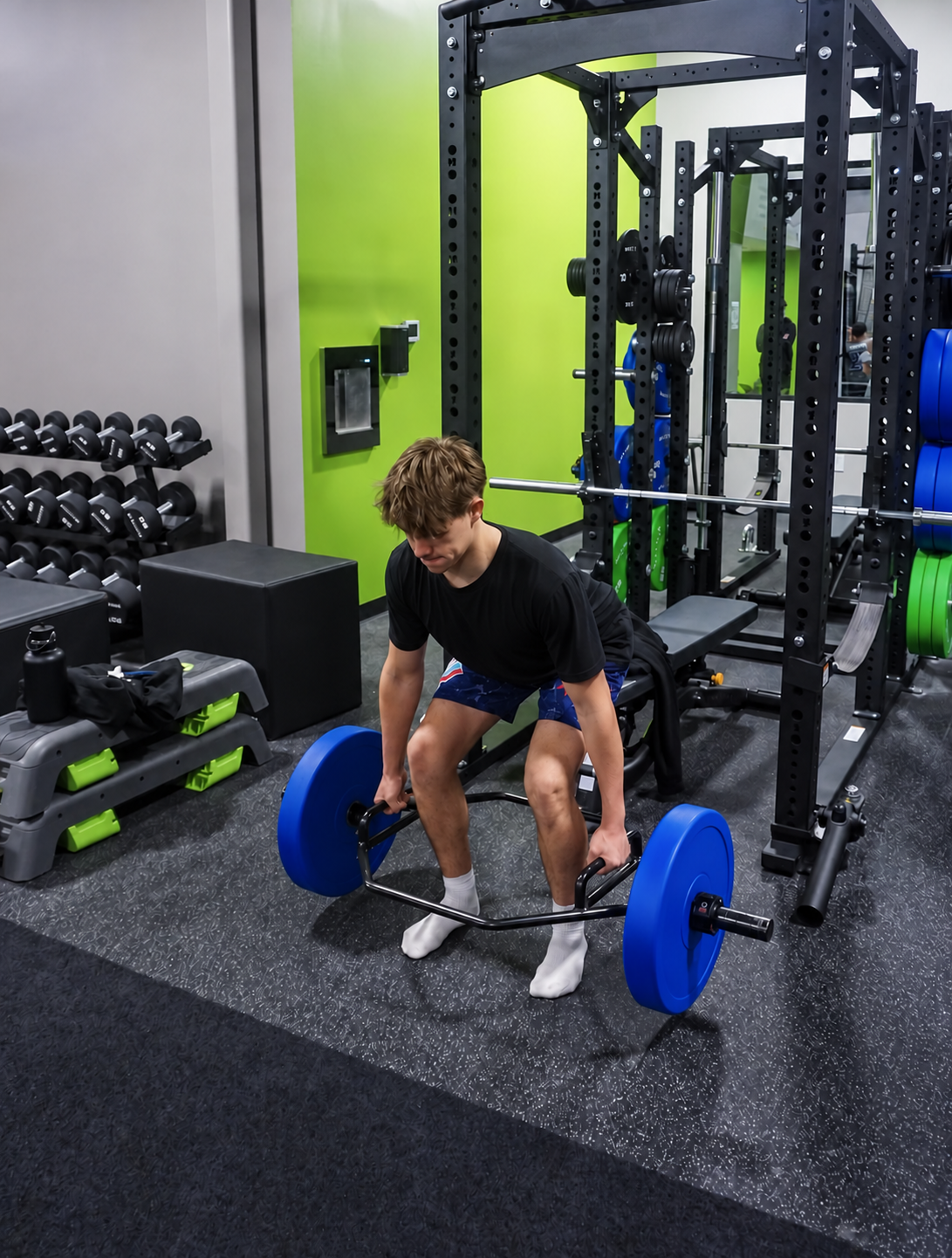
College Development Program
Train for the game you want to play.
Assessment-led strength and conditioning for volleyball athletes who want a clear plan, consistent coaching, and training that carries over to the court.
Athletes per group
Training days per week
Reassessment included
What makes it different
Every exercise needs a reason.
The program is not a collection of hard workouts. We select exercises for how they can help an athlete jump, land, accelerate, change direction, stay healthy, and repeat quality movement throughout a match.
Current sports performance research gives us the framework. Assessment data and hands-on coaching help us apply that framework to each athlete.
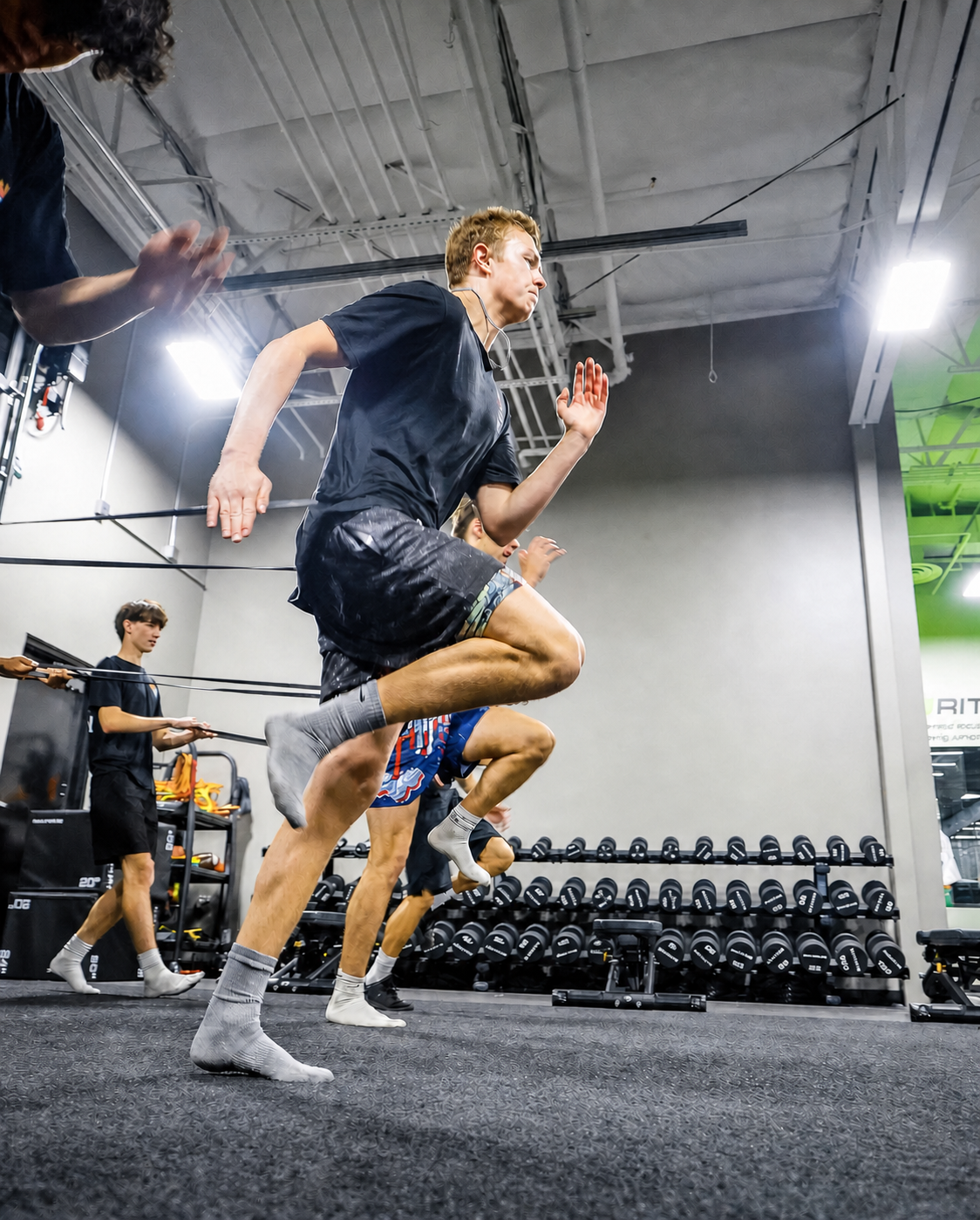
How the program works
A clear path into the lab.
Assess
We measure the qualities that matter for volleyball and find the athlete's starting point.
Place
We match the athlete with a consistent training group and weekly schedule.
Train
The athlete follows a progressive plan with hands-on coaching during every session.
Track
Workouts and progress are documented so training can move forward with purpose.
Reassess
Quarterly testing shows what has changed and helps set the next priorities.
The training pathway
Build the base. Then build speed.
Athletes do not skip straight to advanced power work. We earn each step by building the qualities that make the next step safer and more effective.
Health and movement
Improve control, balance, joint positions, and confidence with the basic patterns used in training.
A strong physical base
Develop the ability to handle training, recover, and produce more force with good technique.
Strength into speed
Learn to apply force faster so strength becomes useful in jumps, approaches, and changes of direction.
Fast, repeatable movement
Prepare athletes to move with speed and control again and again through practices and matches.
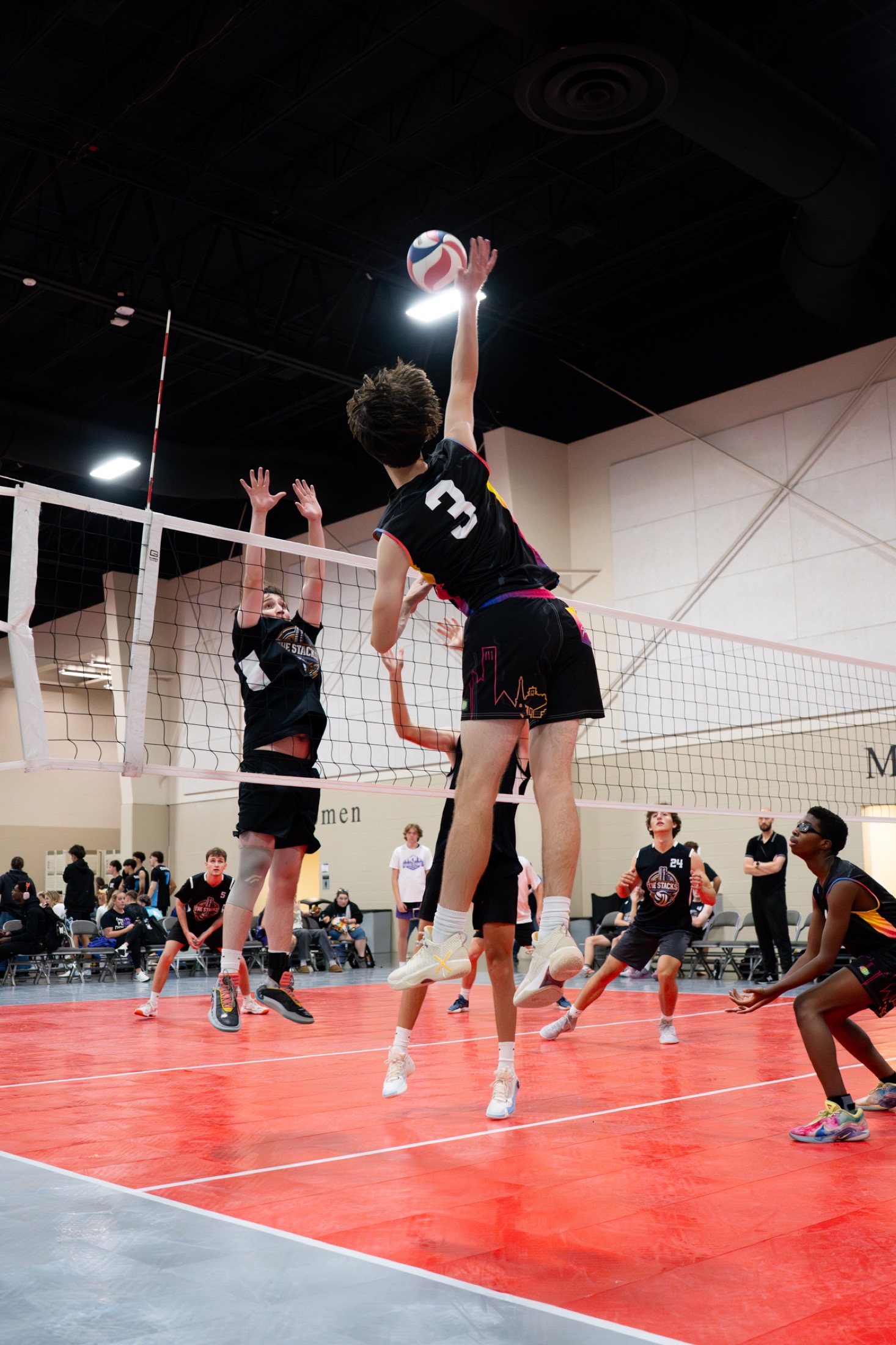
The goal
Training athletes can feel on the court.
Membership options
Choose the schedule that fits the athlete.
There is no online checkout yet. Join the list or text our staff, and we will help choose the right option and available training group.
Founding membership
Two days per week
$299per month
Six-month minimum commitment
Join the Founding Members ListFounding membership
Three days per week
$349per month
Six-month minimum commitment
Join the Founding Members ListStandard membership
Two days per week
$349per month
Three-month minimum commitment
Text our staffStandard membership
Three days per week
$399per month
Three-month minimum commitment
Text our staffTraining schedule
Consistent times. Consistent groups.
Athletes choose an available group that works with school and club commitments.
Monday through Thursday
4:00 to 5:30 PM
5:30 to 7:00 PM
7:00 to 8:30 PM
Friday
4:00 to 5:30 PM
5:30 to 7:00 PM
Start with an assessment
Know where the athlete is starting.
The preliminary intake assessment is $150 and is waived with a membership commitment. Active members receive quarterly reassessments at no additional charge.
FROM THE LAB TO THE COURT
TRAIN IT. OWN IT. USE IT.

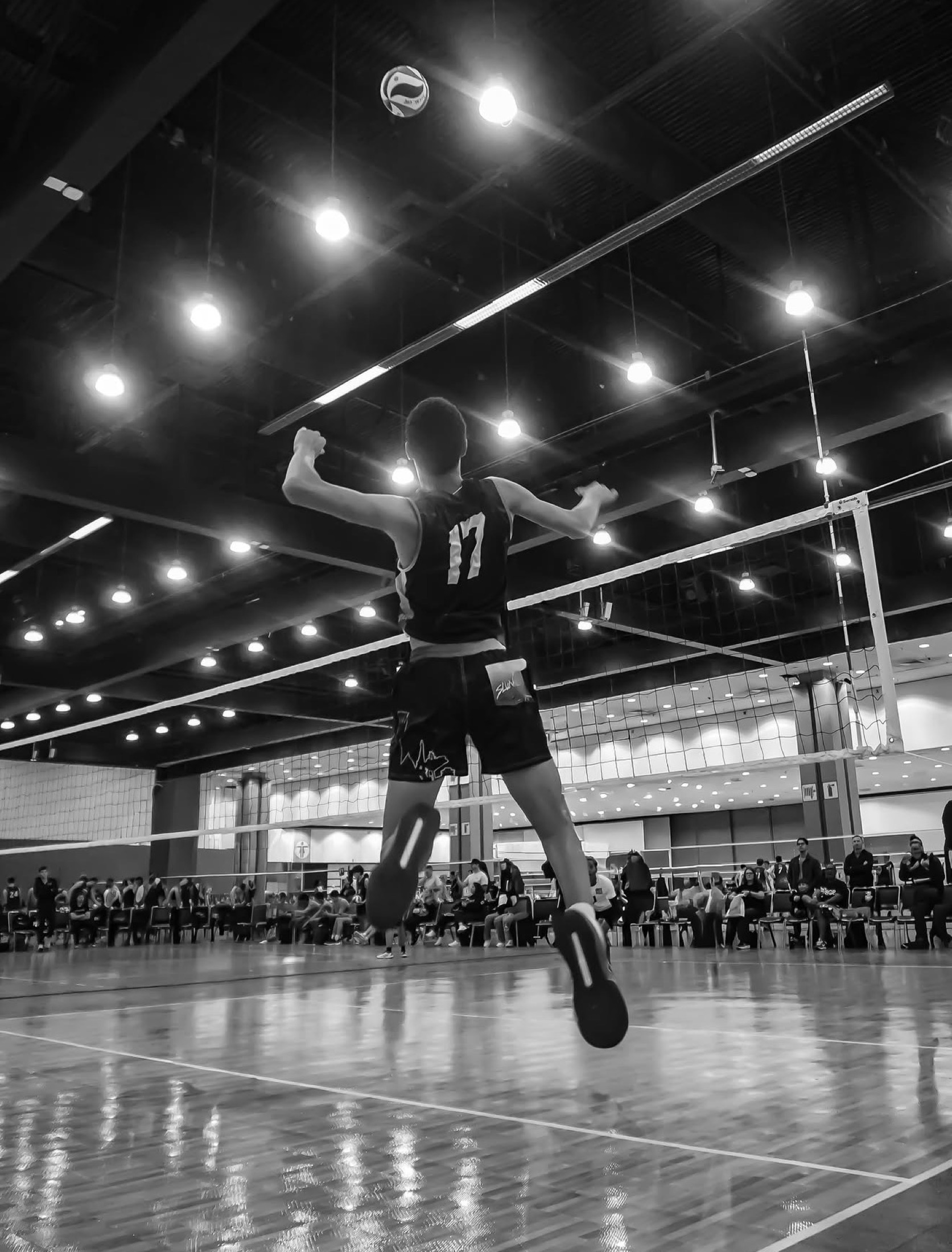
What the athlete should gain
TRAINING THAT SHOWS UP WHEN THE BALL IS LIVE.
The program is built around outcomes an athlete can recognize in practice and competition. Progress is not one number. It is the growing ability to create force, control force, move sooner, and repeat quality efforts.
OWN THE LANDING
Control the body after a jump and be ready for the next play.
GET TO THE BALL SOONER
Improve the first step, acceleration, and the ability to change direction.
USE MORE STRENGTH
Learn to apply force in the positions and time frames volleyball demands.
REPEAT QUALITY JUMPS
Prepare for the repeated efforts that accumulate across practices and matches.
TRAIN WITH CONFIDENCE
Understand the purpose of the work and know what good movement should feel like.
SEE THE NEXT STEP
Use reassessment and coaching feedback to make progress visible.
The fifth-set test
THE FIRST JUMP MATTERS. SO DOES THE FORTIETH.
A volleyball athlete does not train for one perfect rep in an empty gym. The match asks for another approach, another landing, another transition, and another decision after fatigue has started to change movement.
That is the story behind the program. Build a strong base. Learn to apply it quickly. Keep enough control to use it again when the score is tight.
Questions worth asking
“WHY SHOULD WE ADD THIS?”
Families already invest time and money in club volleyball, lessons, and training. These are fair questions, and they deserve clear answers.
“MY ATHLETE ALREADY WORKS WITH A PERSONAL TRAINER.”
A qualified trainer can build general strength. VPL adds volleyball context, assessment-led programming, consistent group placement, and exercise selection tied to jumping, landing, acceleration, and repeatable movement.
“CLUB PRACTICE ALREADY HAS CONDITIONING.”
Club practice develops volleyball skill, tactics, and decision-making. VPL builds the physical tools that help the athlete express those skills with more control, force, and consistency.
“IS MORE TRAINING ALWAYS BETTER?”
No. More work is only useful when it fits the athlete’s total load. VPL accounts for practices, tournaments, school, recovery, and training history before progressing volume or intensity.
“WILL THIS GUARANTEE A BIGGER JUMP OR A SCHOLARSHIP?”
No responsible program can promise either. VPL can provide expert coaching, a clear process, progressive training, and honest measurement of the physical qualities the athlete can improve.
The court-transfer scorecard
A SIMPLE WAY TO JUDGE ANY EXERCISE.
Before an exercise earns a place in the program, it should pass at least one of these tests.
MOVEDoes it improve a position or pattern the athlete needs?
PRODUCEDoes it help the athlete create useful force?
ABSORBDoes it improve control when force comes back into the body?
REPEATDoes it prepare the athlete to maintain quality through volume and fatigue?
PROTECTDoes it build capacity for the demands the athlete repeatedly faces?
Research-backed, coach-translated
THE SCIENCE SHOULD GUIDE THE PLAN, NOT CONFUSE THE FAMILY.
Youth resistance training can be safe and beneficial when it is age-appropriate and supervised by qualified coaches. Volleyball research also supports progressive strength, plyometric, and neuromuscular training for qualities such as jump performance, speed, and movement control.
Research provides the framework. The athlete’s assessment, training history, schedule, and response determine how that framework is applied.
Proof from the people doing the work
TESTIMONIALS ARE COMING.
These spaces are reserved for verified VPL athlete, parent, and coach experiences.
Future verified story about why the family chose VPL and what made the investment worthwhile.
Parent name and athlete ageFuture verified story about confidence, physical development, and what the athlete noticed on the court.
Athlete name and teamFuture verified story about visible changes in movement, consistency, or readiness.
Coach name and roleQuick answers
Before you get started.
Who is this program for?
Volleyball athletes who want a structured strength and conditioning plan, consistent coaching, and training that supports on-court movement.
How large are the groups?
Each consistent training group has 6 to 12 athletes.
Do athletes need experience in the weight room?
No. Coaching and progressions are adjusted to the athlete's current training experience.
What is the fastest way to reach VPL?
Text (702) 373-6621. The phone is not monitored continuously, so texting receives the fastest response.
Ready to take the next step?
Start with a conversation.
Tell us about the athlete, current goals, and weekly schedule. We will help with the next step.